
Last updated September 10, 2026
Level 1 sweep and inspection to the NFPA 211 annual standard - flue, crown, cap, and flashing checked and photographed
Chimney sweep logs do not sweep chimneys. They loosen some creosote - which then falls where a brush and vacuum still have to collect it.
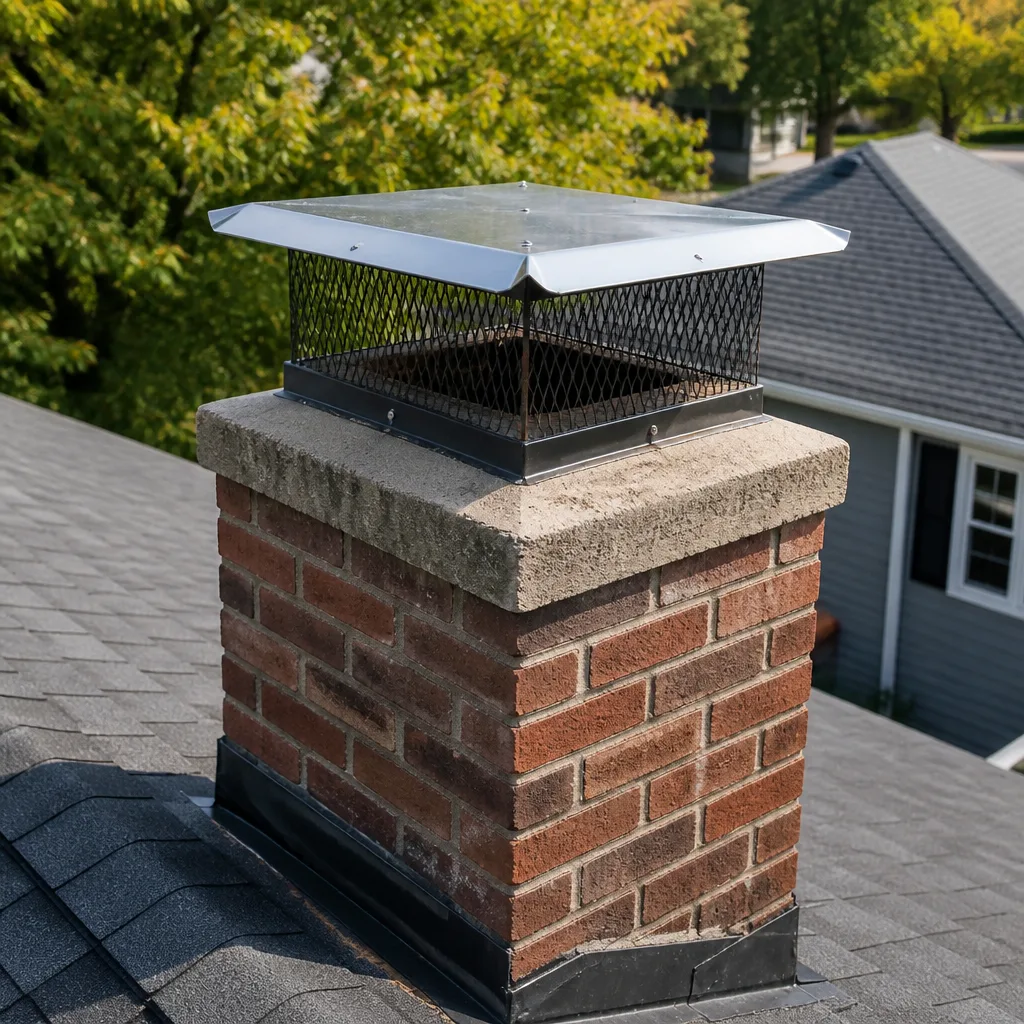
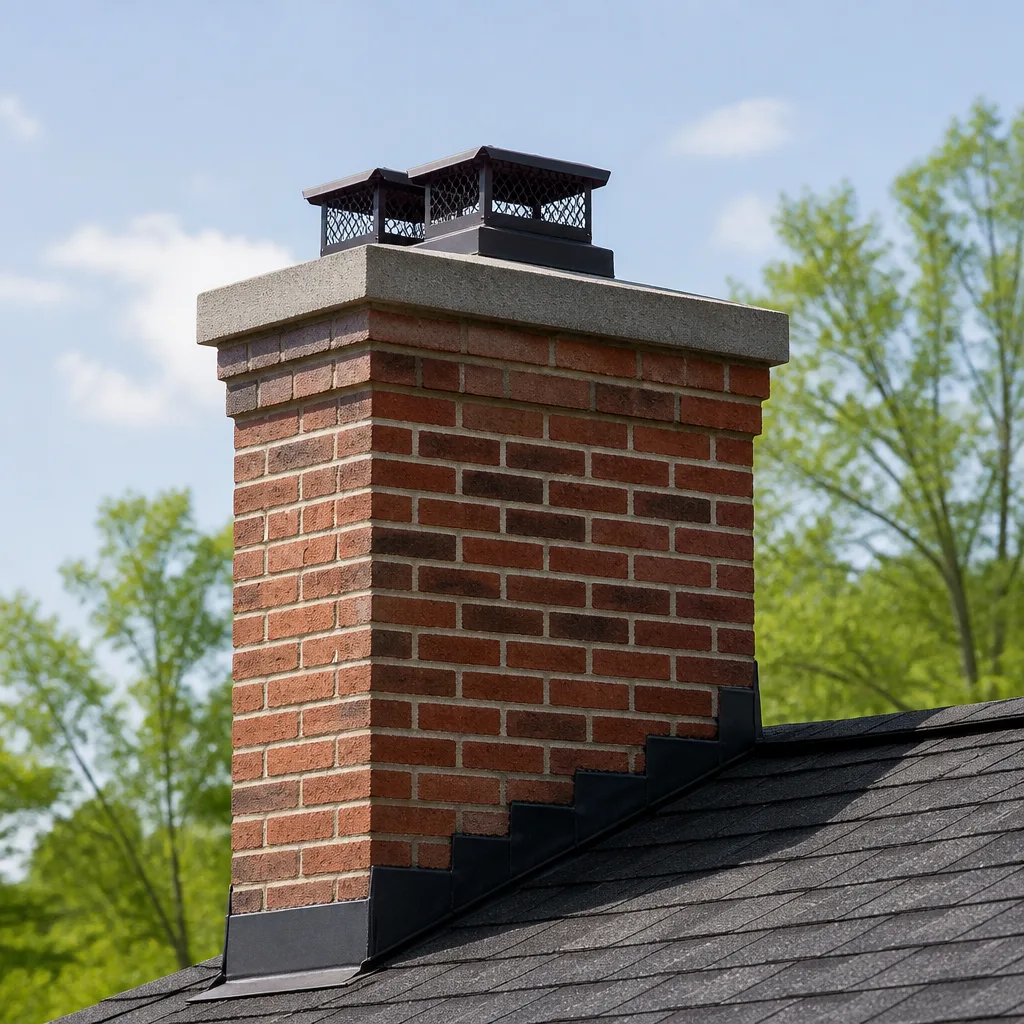
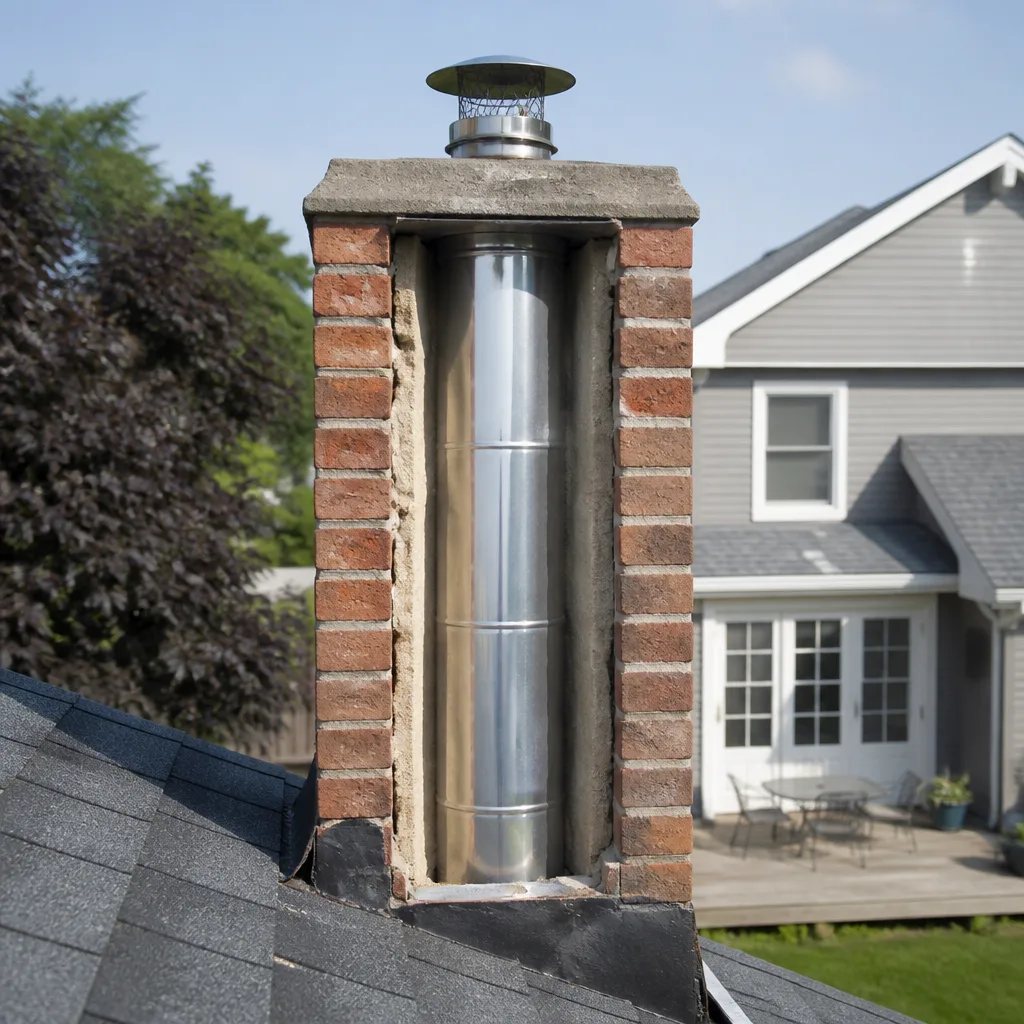
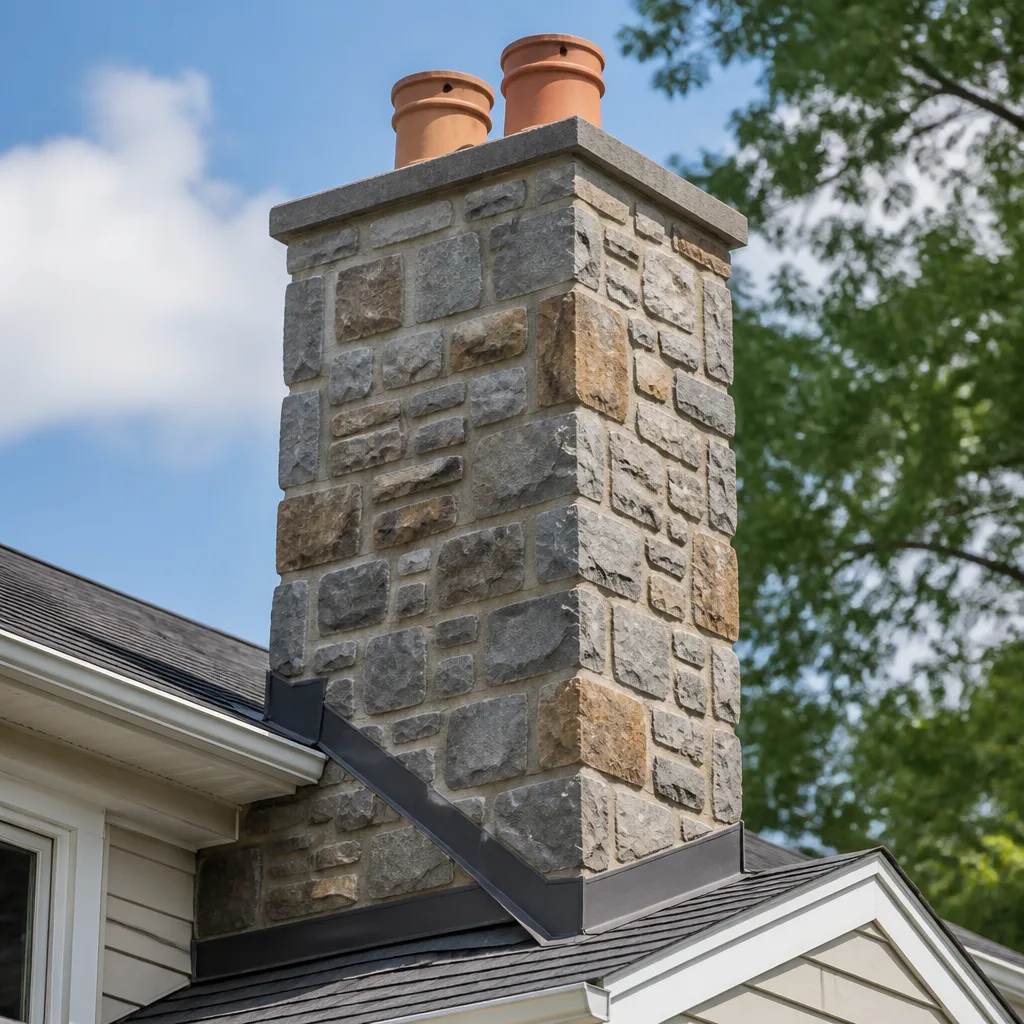
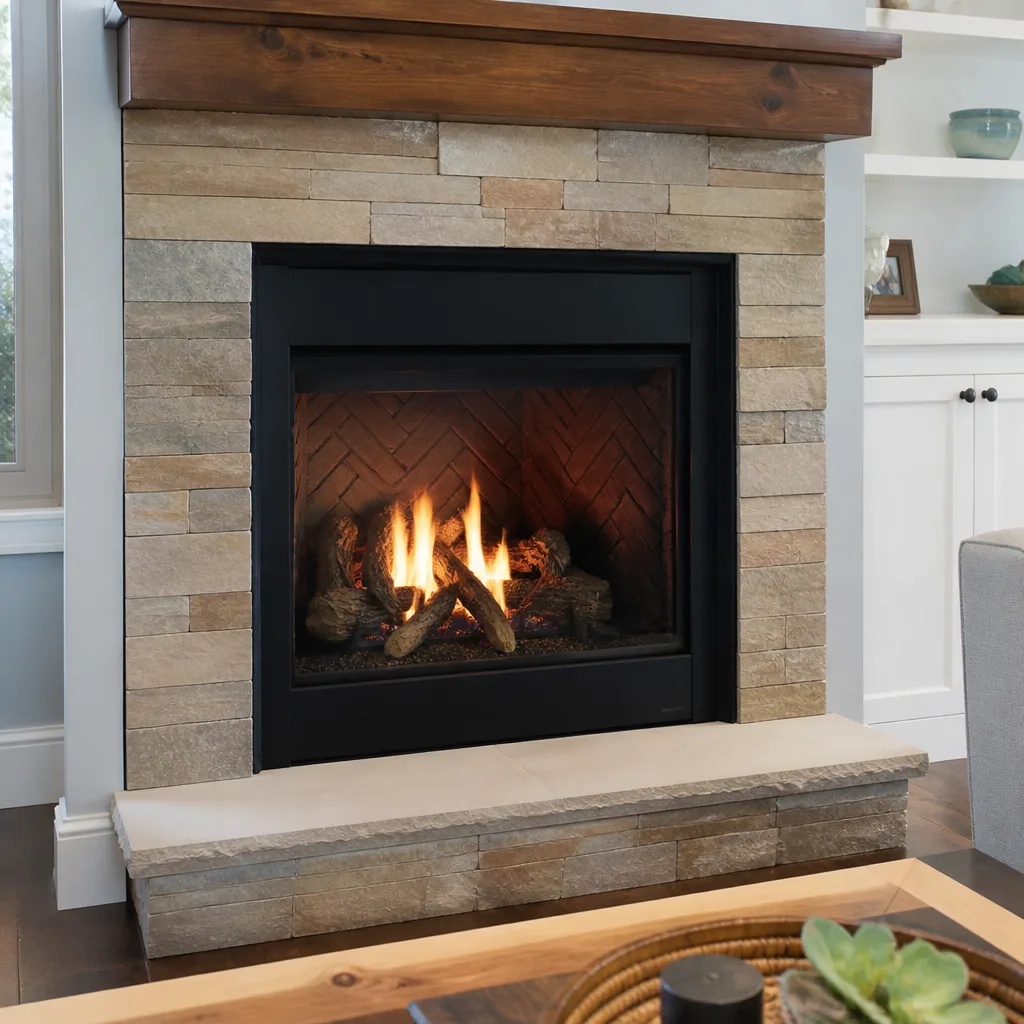
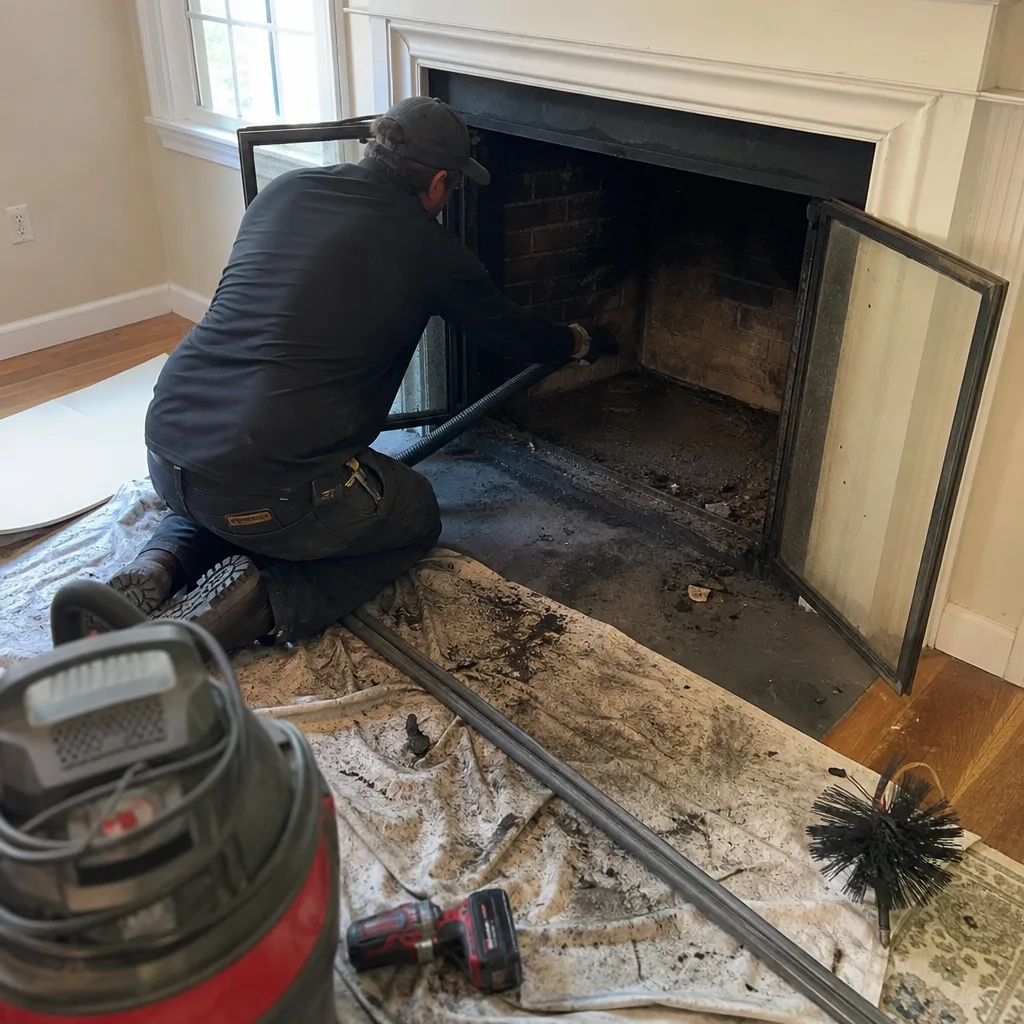 Before
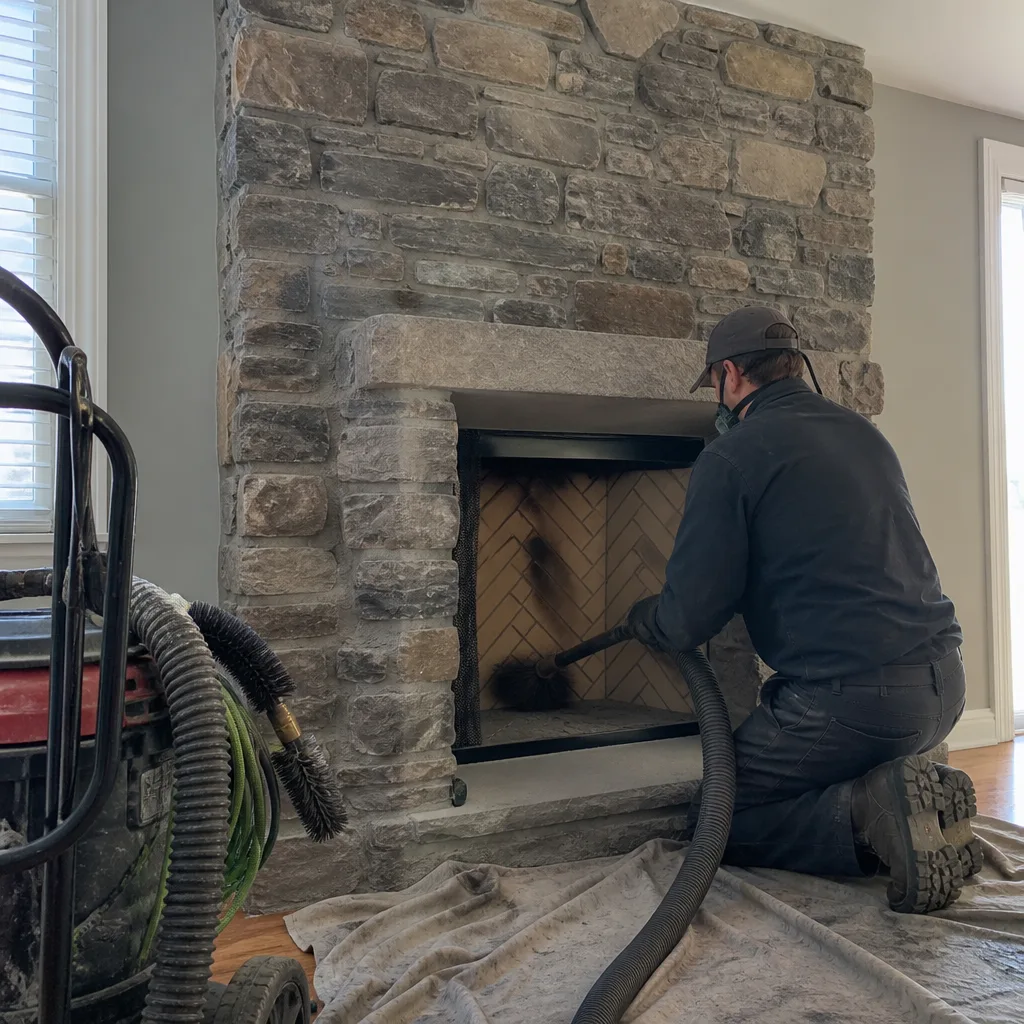 After
After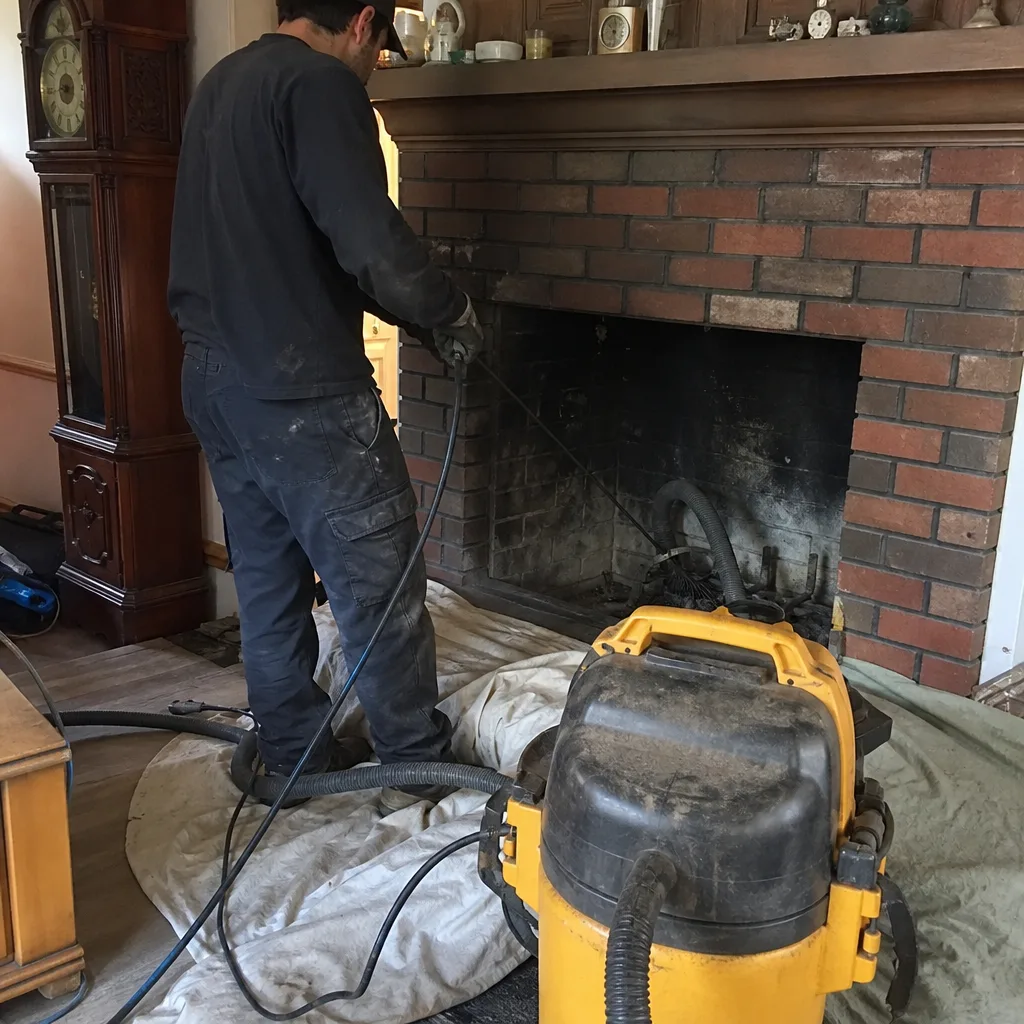 Before
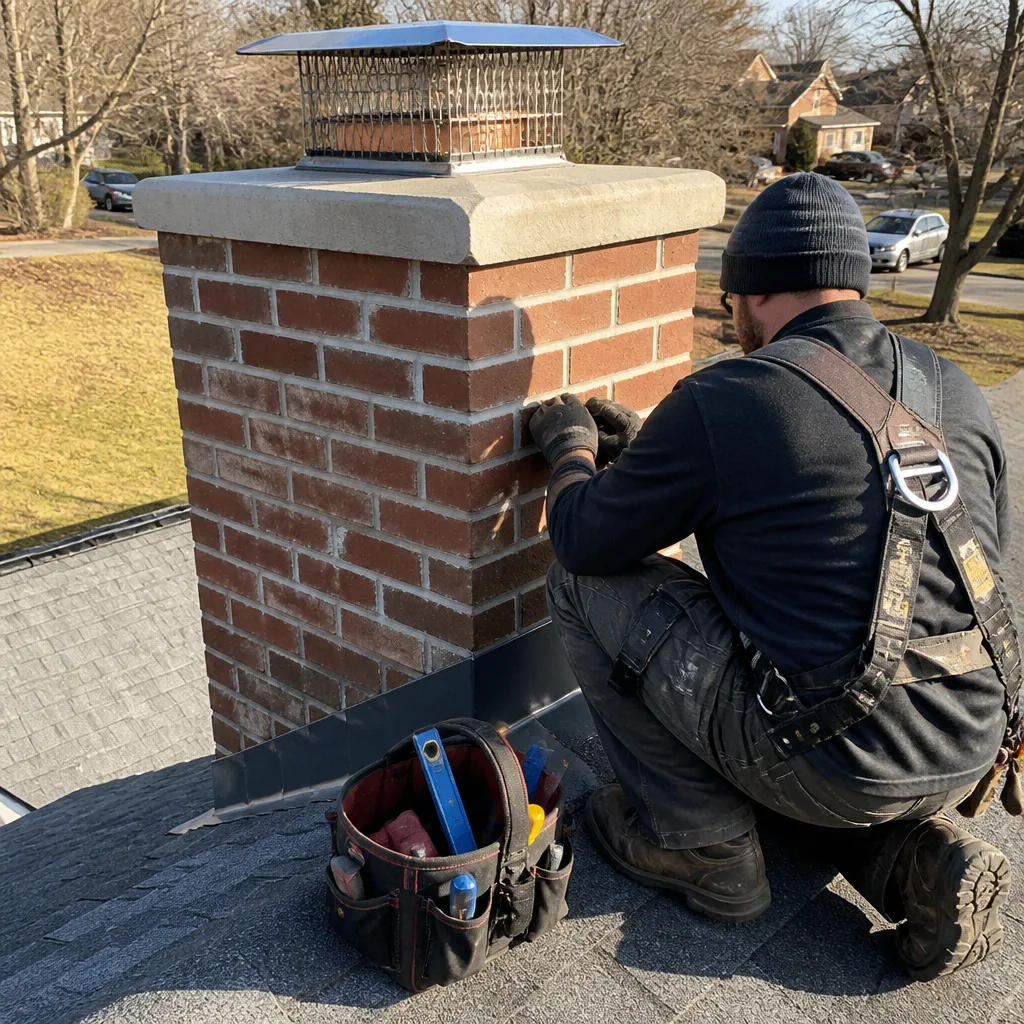 After
After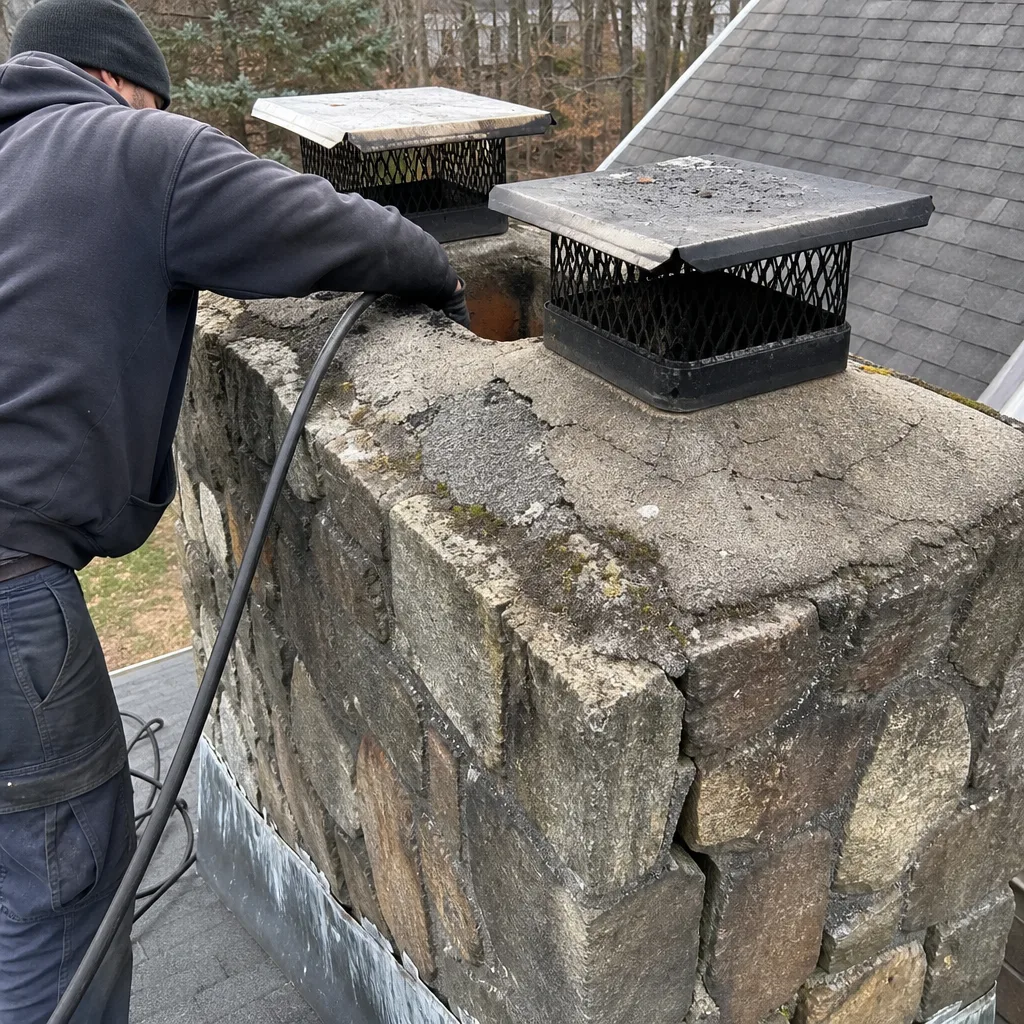 Before
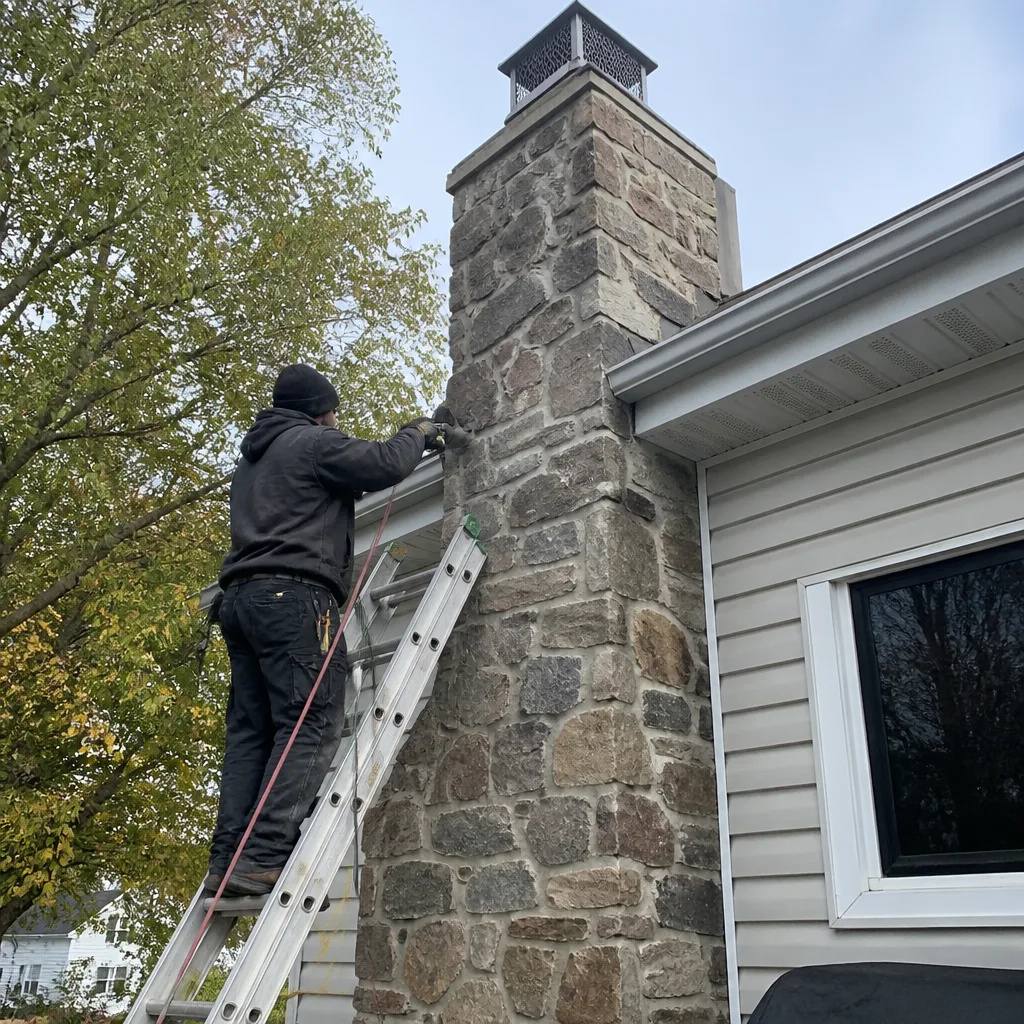 After
AfterThe Complete Guide to Chimney Cleaning in Danbury
A cord of wet firewood burned through a Danbury winter deposits roughly three times more creosote than the same cord properly seasoned - yet most cleaning schedules ignore fuel quality entirely. Fairfield County homeowners who treat chimney sweeping as a simple once-a-year checkbox often miss the real variables that determine whether their flue is safe: what wood species they’re burning, how Connecticut’s freeze-thaw cycle attacks mortar between fires, and whether their last inspection produced photo evidence or just a verbal thumbs-up. This guide explains how chimneys actually age in Danbury’s climate, what a proper cleaning and inspection should include, and how to read a sweep’s report like someone who intends to stay in their home for another twenty years. For more guides & resources, visit our blog.
Quick Answer
Professional chimney cleaning in Danbury typically costs between $199 and $349 for a standard sweep with Level 1 inspection, and should be performed annually for wood-burning systems used regularly. A proper service includes a visual examination of the flue, smoke chamber, and accessible portions of the appliance, with creosote removal using brushes and vacuum equipment rated for fireplace residue. Homes with inserts, pellet stoves, or gaps in use should request a Level 2 camera inspection to evaluate liner condition, especially given Fairfield County’s freeze-thaw stress on masonry. See our DIY vs Professional Chimney Cleaning: The Danbury Homeowner’s Decision Guide to understand when professional service is essential.
Table of Contents
- How Often Should a Chimney Be Cleaned in Danbury?
- What Chimney Cleaning Costs in Danbury (and What Drives the Price)
- Level 1 vs. Level 2 vs. Level 3 Inspections: Which One Do You Need?
- How Danbury’s Climate Damages Chimneys Between Sweeps
- The Wood You Burn in Fairfield County Matters More Than You Think
- How to Read a Chimney Inspection Report
- What Happens During a Professional Chimney Cleaning
- Common Mistakes to Avoid
- When to Call a Professional
- Frequently Asked Questions
How Often Should a Chimney Be Cleaned in Danbury?
The National Fire Protection Association recommends annual inspection for all chimney systems, and cleaning as needed based on creosote accumulation. In practice, most Danbury homeowners with wood-burning fireplaces or stoves need a professional sweep once per year if they burn three or more cords per season. Those who burn less, or who use their fireplace only occasionally for ambiance, may stretch to every two years - provided the inspection still happens annually.
But “as needed” is where Fairfield County specifics matter. Danbury’s position in the Housatonic Valley means colder overnight lows than coastal Connecticut, and many homeowners run their fires longer into the shoulder seasons. Extended burn seasons mean more cycles of heating and cooling, which produces more creosote and more thermal stress on clay flue liners.
Here is how we advise scheduling based on actual use patterns we see in neighborhoods from King Street to Shelter Rock:
- Primary heat source (3+ cords/year): Sweep annually, ideally in late summer before the first hard frost. Request Level 2 camera inspection every 3-5 years.
- Supplemental heat (1-2 cords/year): Annual inspection required; sweep every 1-2 years depending on creosote depth measured during inspection.
- Occasional ambiance (less than 1 cord/year): Annual inspection; sweep when creosote exceeds 1/8-inch buildup.
- Gas log set or insert: Annual inspection to check for debris blockages, liner integrity, and proper venting; cleaning frequency lower but not zero.
- Property sale or new purchase: Level 2 inspection before closing, regardless of apparent condition.
- After any chimney fire, lightning strike, or seismic event: Level 2 or Level 3 inspection before next use.
The 1/8-inch creosote threshold is not arbitrary. That depth, roughly the thickness of a nickel, is where glazed creosote becomes difficult to remove with standard brushing and may require chemical treatment or rotary equipment. In our experience inspecting homes near Tarrywile Park and around Lake Kenosia, homeowners who burn green oak - common in Fairfield County woodlots - often reach this threshold faster than they expect.
One more Danbury-specific note: homes in the city’s older neighborhoods, particularly those built before 1960 with original masonry, often have unlined flues or early clay liners that have endured decades of freeze-thaw cycling. These systems warrant more frequent inspection regardless of use level, because mortar degradation can open gaps between flue tiles that allow creosote to accumulate in wall cavities.
What Chimney Cleaning Costs in Danbury (and What Drives the Price)
Chimney cleaning prices in Danbury reflect labor rates in Fairfield County, travel considerations for technicians serving the broader region, and the complexity of the system being serviced. The lowest legitimate price we see advertised is rarely the price paid, once add-ons for “heavier than expected” creosote or mandatory inspections are applied.
| Service | Typical Price Range in Danbury | What’s Included |
|---|---|---|
| Standard sweep with Level 1 inspection | $199 - $349 | Visual exam of accessible flue, smoke chamber, firebox; brushing and vacuuming; basic condition report |
| Level 2 camera inspection (add-on or standalone) | $299 - $499 | Video scan of full flue interior; photos of all four sides; written documentation; plain-English verdict |
| Heavily glazed creosote removal | $150 - $300 additional | Chemical treatment or rotary cleaning for Stage 2 or 3 creosote; may require second visit |
| Insert or pellet stove service | $249 - $399 | Removal/reinstallation of appliance for flue access; specialized venting inspection |
| Chimney cap or crown evaluation | $0 - $75 (often bundled) | Assessment of water intrusion protection; photo documentation of cracks or deterioration |
Several factors push Danbury jobs toward the higher end of these ranges:
- Roof access difficulty: Steep pitches, slate roofs common in older Danbury neighborhoods, or ice dam conditions in winter add labor time and safety equipment requirements.
- Insert or stove complexity: A wood insert in a factory-built fireplace requires partial disassembly for proper flue access. Not all sweeps are equipped for this.
- Creosote severity: Stage 2 glazed creosote or Stage 3 tar-like deposits require mechanical or chemical treatment beyond standard brushing.
- Multiple flues: Homes with separate fireplace and furnace flues, common in Danbury’s pre-1980 housing stock, require separate cleaning and inspection.
At Hearthstone Chimney Co. home, we provide no-hassle upfront pricing - the number on the estimate is the number on the invoice. Our $89 Seasonal Tune-Up covers basic inspection and light maintenance for gas systems, while our standard sweep and inspection for wood-burning systems falls within the ranges above. We also offer $50 off any repair over $250, a free second opinion on any written estimate, and a permanent 5% senior and veteran discount.
The real cost to watch is not the sweep itself but what an inadequate inspection fails to catch. A $199 sweep that misses a deteriorating liner or cracked crown can lead to $3,000-$8,000 in water damage, structural repair, or - in the worst case - a chimney fire that damages the home and endangers occupants.
Level 1 vs. Level 2 vs. Level 3 Inspections: Which One Do You Need?
Not all chimney inspections are equal. The NFPA 211 standard defines three levels, and understanding the difference protects you from both inadequate assessments and unnecessary expense.
Level 1 Inspection
This is the baseline - a visual examination of readily accessible portions of the chimney exterior, interior, and connecting appliances. No tools are used to open or remove components. A Level 1 is appropriate when:
- The appliance or venting system has not changed
- You are continuing with the same fuel type
- No performance problems are suspected
- The system has been regularly maintained
For many Danbury homeowners who burn properly seasoned hardwood, clean their systems annually, and have no plans to sell, a Level 1 combined with standard sweeping is sufficient for routine maintenance. If you’re selecting a provider, our How to Hire a Chimney Cleaning Contractor in Danbury: A Step-by-Step Guide can help.
Level 2 Inspection
This is where Chimney Cleaning & Sweep in Danbury becomes genuinely diagnostic. A Level 2 includes everything in Level 1, plus examination of accessible attics, crawl spaces, and basements, and - critically - a video scan of the interior flue surfaces. At Hearthstone, our Level 2 inspections end with photos you can see and a plain-English verdict.
Level 2 is required when:
- The property is being sold or transferred
- Any change is made to the appliance or fuel type
- After a chimney fire, lightning strike, or seismic event
- After a period of disuse exceeding one season
- When structural damage is suspected or observed
In Danbury’s real estate market, we strongly recommend Level 2 inspection before any home purchase. We have found cracked flue tiles, improper clearances to combustibles, and deteriorated mortar joints in homes with “clean” Level 1 reports from other providers. The camera does not lie; a verbal-only verdict does not protect you.
Level 3 Inspection
This is invasive inspection, requiring removal of building materials or chimney components to access concealed areas. Level 3 is warranted only when a Level 1 or 2 inspection reveals a hazard that cannot be fully evaluated without demolition - for example, suspected fire damage inside a wall cavity, or a chimney fire that may have compromised structural elements.
Level 3 is rare. In 42 years serving Fairfield County, we have recommended it fewer than fifty times. When we do, we explain exactly why, what we expect to find, and what repair options exist before any wall is opened.
How Danbury’s Climate Damages Chimneys Between Sweeps
National chimney guides assume a generic temperate climate. Danbury’s does not qualify. The city averages more than 40 freeze-thaw cycles annually, with January lows regularly dipping below 15°F and March days swinging from 20°F to 50°F within hours.
Each cycle drives moisture deeper into masonry. Rain or melting snow enters hairline cracks in the crown or mortar joints. When temperatures drop, that water expands by roughly 9% in volume. The pressure flakes off surface mortar, widens cracks, and eventually spalls brick faces. By spring, a chimney that looked sound in October may show visible deterioration.
The flue liner suffers separately. Clay tile liners expand and contract with heating and cooling. After decades of cycles, the mortar between tiles cracks or falls away, creating gaps where creosote accumulates and heat can reach combustible framing. In homes near the Still River or in low-lying areas like the southern end of Main Street, higher humidity accelerates this process by keeping masonry damp longer between freezes.
What this means for cleaning schedules:
- Chimneys in Danbury’s older neighborhoods - Wooster Heights, Shelter Rock, areas north of I-84 with pre-1970 construction - should be inspected annually even with light use, because structural degradation progresses independently of creosote buildup.
- After any winter with extended freeze-thaw cycling, such as 2022-2023’s repeated January thaw-refreeze events, a mid-season visual check of the exterior crown and cap is prudent.
- Waterproofing treatments, applied after proper cleaning and repair, use breathable sealants from brands like Olympia Chimney and Copperfield that allow vapor escape while blocking liquid intrusion. This is not a substitute for crown repair or cap installation, but it extends the interval between major masonry work.
We have rebuilt crowns in Danbury homes where the previous owner skipped three years of inspection, assuming low use meant low risk. The freeze-thaw cycle does not check your burn log before attacking your mortar.
The Wood You Burn in Fairfield County Matters More Than You Think
Firewood sold in Danbury comes from varied sources: local hardwood lots, Connecticut state forest permits, truckloads from upstate New York or Vermont, and occasionally seasoned stock from professional suppliers. The species, moisture content, and storage conditions of that wood determine your creosote production more than any other controllable factor.
Green oak - Quercus species common in Fairfield County woodlots - is particularly problematic. Fresh-cut oak holds 60-80% moisture by weight and can take 18-24 months to season properly in Connecticut’s humid summers. Burning it before full seasoning forces the fire to boil off water before producing useful heat, lowering flue temperatures and allowing creosote to condense on cooler surfaces. The result is Stage 2 glazed creosote: shiny, tar-like, and mechanically bonded to flue tiles.
Softwoods like pine or spruce, often dismissed as “dirty” burning, actually produce less creosote per cord when properly seasoned because they burn hotter and faster, keeping flue temperatures above the condensation threshold. The tradeoff is faster fuel consumption and more frequent reloading.
Best practice for Danbury homeowners:
- Buy or cut wood 18-24 months before burning. Split to 4-6 inch diameter, stack off the ground with airflow on all sides, cover the top only.
- Target 15-20% moisture content. A simple moisture meter costs $25 and eliminates guesswork. Test the split face, not the bark.
- Prefer mixed hardwoods: Oak, hickory, and sugar maple for sustained heat; ash or beech for easier splitting and faster seasoning.
- Avoid construction debris, painted or pressure-treated lumber, and driftwood from Long Island Sound. These release toxic compounds and accelerate corrosion of metal components.
In our inspections of homes from Newtown Road to the west side near the New York line, we can often estimate a homeowner’s wood source by the creosote pattern. Tight, heavy glazing suggests green oak or poor draft. Powdery, easily brushed residue indicates well-seasoned hardwood and adequate combustion air. The difference in cleaning difficulty, and in fire risk, is substantial.
How to Read a Chimney Inspection Report
A proper inspection report is a document you keep with your home records, reference when selling, and use to plan maintenance. A verbal “looks fine” or a checkbox form with no photos is not adequate for a system that vents combustion gases through your living space.
At Hearthstone, every Level 2 inspection produces a written report with dated photos, a narrative description of findings, and a clear verdict. Here is what the terminology means in practice:
“Serviceable” or “Acceptable” - The component is performing its intended function with no conditions requiring repair or monitoring beyond normal maintenance. This does not mean “new” or “perfect.” A 30-year-old clay liner with minor surface staining but intact joints and no spalling can be serviceable. We note expected remaining lifespan when relevant.
“Restricted” or “Monitor” - A condition exists that does not present immediate hazard but will likely require attention before the next inspection cycle. Examples include minor crown cracking without water intrusion, beginning mortar joint erosion, or creosote approaching 1/8-inch in a low-use system. We specify the recommended re-evaluation interval and what change would escalate the rating.
“Unsafe” or “Hazardous” - The system should not be operated until repair is completed. This includes cracked flue tiles with visible gaps, detached or missing liner sections, improper clearances to combustibles, or structural instability. We explain the specific hazard, recommend immediate next steps, and provide repair options with pricing.
Red flags in any report:
- No photos, or photos without clear labels indicating location and orientation
- Vague language like “some wear” or “getting old” without specific measurements or locations
- Recommendations for immediate major repair without clear documentation of why
- No distinction between conditions that affect safety and conditions that affect longevity alone
We have reviewed competitor reports that recommended full liner replacement based on “suspected” damage the technician did not photograph. In writing, no arguing - our 90-Day Done Right Promise means we document what we claim. If we recommend a repair, you see what we see.
What Happens During a Professional Chimney Cleaning
Understanding the actual process helps you evaluate whether a sweep is thorough or cutting corners. A proper cleaning is methodical, contained, and leaves no mess in your home.
Pre-service (5-10 minutes)
The technician lays protective floor coverings, inspects the visible firebox and hearth for damage that might affect cleaning, and confirms the type of appliance and flue configuration. For inserts, this includes verifying proper clearances and whether the insert must be partially removed for flue access.
Chimney top inspection (10-15 minutes)
On the roof, the technician examines the cap, crown, flashing, and exterior masonry condition. In Danbury’s winter, this may require ice removal or waiting for safe roof conditions. We do not rush roof work; a fall injury helps no one.
Flue cleaning (30-60 minutes)
Using rods and brushes sized to the flue diameter, the technician scrubs the full length from top to bottom or bottom to top depending on access. A HEPA vacuum running continuously captures loosened debris. For metal liners, poly or wire brushes appropriate to the liner material are used - steel brushes on stainless DuraFlex liners, softer materials on aluminum.
Smoke chamber and firebox cleaning (15-20 minutes)
The area above the damper and the firebox floor receive hand brushing and vacuuming. This is where significant creosote often accumulates and where many less-thorough sweeps stop early.
Final inspection and documentation (10-15 minutes)
The technician performs post-cleaning visual inspection, notes any conditions requiring repair, and provides the written report. For Level 2 inspections, the camera scan happens after cleaning so surfaces are visible.
Total time for a standard sweep and Level 1 inspection: 90 minutes to two hours. Rushed jobs that promise “in and out in 30 minutes” typically skip the smoke chamber, fail to inspect the crown, or use inadequate brush sizing.
Common Mistakes to Avoid
- Scheduling based on the calendar alone, not actual use or fuel quality. A homeowner burning three cords of green oak needs more frequent service than one burning half a cord of kiln-dried hardwood, regardless of what month it is.
- Hiring based on lowest price without verifying what’s included. The $149 “special” often excludes the inspection, charges extra for “heavy” creosote, or sends an unqualified technician who cannot evaluate liner condition.
- Accepting a verbal-only verdict. In Danbury’s active real estate market, undocumented claims create liability for sellers and surprises for buyers. Photos and written reports protect everyone.
- Ignoring the crown and cap. Water intrusion from failed crown or missing cap causes more chimney damage in Fairfield County than creosote-related fires. The sweep should evaluate these even if you only requested “cleaning.”
- Assuming gas systems need no inspection. Gas fireplaces and furnaces produce corrosive condensation, and their liners can deteriorate or become blocked by debris. Annual inspection remains essential.
- DIY cleaning without proper equipment or knowledge. Homeowner brush kits often use incorrect brush sizing, lack proper vacuum containment, and cannot evaluate hidden damage. The savings are false economy if a fire or carbon monoxide incident results.
- Waiting for visible problems before calling. By the time you see stains on the ceiling or smell smoke in the house, damage is advanced. Preventive inspection costs a fraction of reactive repair.
When to Call a Professional
Certain conditions require prompt professional evaluation, not scheduled maintenance. Call for immediate inspection if you experience smoke backing up into the room, a strong odor of creosote or asphalt during burning, visible cracks in the firebox or exterior masonry, or any event that may have damaged the chimney - a chimney fire, lightning strike, earthquake, or significant windstorm.
Carbon monoxide symptoms - headache, dizziness, nausea while the fireplace or furnace operates - demand emergency response: leave the home, call 911, and do not operate the appliance until cleared by a professional. A blocked or damaged flue can vent deadly gases into living spaces without visible warning.
For routine maintenance, schedule before the burning season begins. In Danbury, that means August through October for optimal availability. Winter appointments are possible but may be delayed by weather conditions that make roof work unsafe.
Chimney Repair in Danbury and comprehensive cleaning services are available from Hearthstone Chimney Co., led by Russell Haines. We offer free estimates in Danbury - call (475) 375-9457. A live person answers every call, 24 hours a day, 7 days a week.
Frequently Asked Questions
A standard chimney sweep with Level 1 inspection in Danbury typically ranges from $199 to $349, depending on system complexity, creosote severity, and roof access conditions. Level 2 camera inspections run $299 to $499 and include photo documentation of the full flue interior. Call (475) 375-9457 for an exact quote - estimates are free, and the price we quote is the price on the invoice.
Not always. A liner needs replacement when it is cracked, separated, corroded, or improperly sized for the appliance it serves - conditions we document with camera photos, not verbal claims. In some cases, a damaged liner can be repaired with HeatShield cerfractory sealant or relined with a stainless DuraFlex or Olympia Chimney liner rather than full rebuild. We explain what the photos show, what options exist, and which can safely wait if the system remains operational. Nothing is recommended without evidence you can see for yourself.
The NFPA recommends annual inspection for all chimney systems, with cleaning frequency determined by creosote accumulation. Most Danbury homeowners burning wood as primary or supplemental heat need annual sweeping. Occasional users may extend to every two years with annual inspection. Gas systems require annual inspection but less frequent cleaning. The specific interval depends on fuel quality, burn practices, and liner condition - not just the calendar.
Skipped maintenance leads to creosote accumulation, which restricts draft and increases chimney fire risk. A chimney fire can reach 2,000°F, cracking flue tiles and allowing flames to reach combustible framing. Even without fire, acidic creosote corrodes metal liners and mortar joints, while moisture intrusion from uncaught crown or cap damage degrades masonry. The cost of deferred maintenance typically exceeds preventive care by five to ten times. Call (475) 375-9457 to schedule before problems develop.
Cleaning removes combustible deposits from the flue, smoke chamber, and firebox. Inspection evaluates structural condition, clearances, and operational safety. They are related but distinct services. A sweep without inspection misses developing problems; an inspection without cleaning may be unable to fully evaluate flue surfaces. Professional service in Danbury should include both, with the inspection level matched to your situation.
Homeowners can perform basic firebox and damper cleaning, but full flue cleaning requires proper brush sizing, rod systems, and HEPA vacuum containment that most do not own. More importantly, DIY cleaning does not include professional evaluation of liner condition, crown integrity, or clearance issues that inspection reveals. For the cost of equipment rental and your time, professional service with documented results is the better value - and the safer choice for a system that vents combustion gases through your home.
The Bottom Line
Chimney cleaning in Danbury is not a commodity service. The same sweep price can represent dramatically different value depending on whether the technician inspects thoroughly, documents with photos, and explains findings in plain English - or rushes through with a brush and a verbal “you’re fine.”
Fairfield County’s climate, wood supply, and housing stock create specific risks that generic national advice understates: freeze-thaw damage to masonry, green oak creosote production, and aging unlined flues in pre-1960 homes. A proper maintenance plan accounts for these factors, not just an annual calendar reminder.
The decisions that matter - inspection level, repair timing, fuel selection - are easier when you have documented facts rather than verbal assurances. Photos you can see, a plain-English verdict. In writing, no arguing. That’s the standard we have applied for over 42 years, and it’s the standard we believe Danbury homeowners deserve.
Ready to schedule your chimney cleaning or inspection? Call Hearthstone Chimney Co. at (475) 375-9457 for a free estimate. A live person answers every call, 24 hours a day, 7 days a week. Our background-checked, uniformed technicians complete most jobs in a single visit, and every job is backed by our 90-Day Done Right Promise - Krafted right, Every time, Your home first, Standing behind it.
Fireplace Services in Danbury are also available for homeowners seeking complete hearth maintenance and repair.
Written by Russell Haines, Owner at Hearthstone Chimney Co., serving Danbury since 2014.